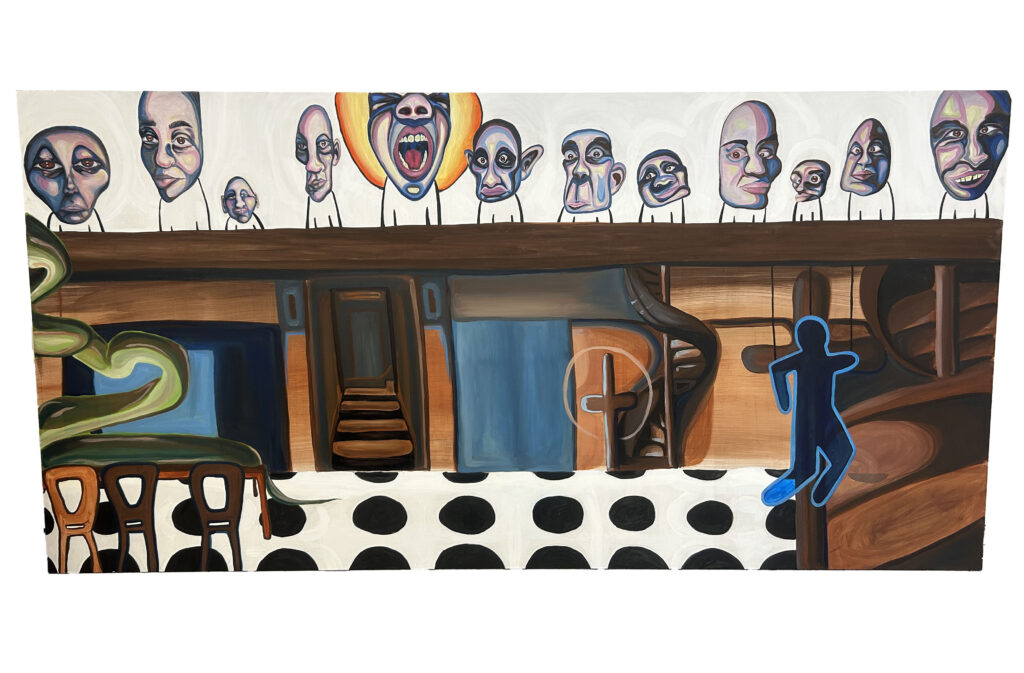
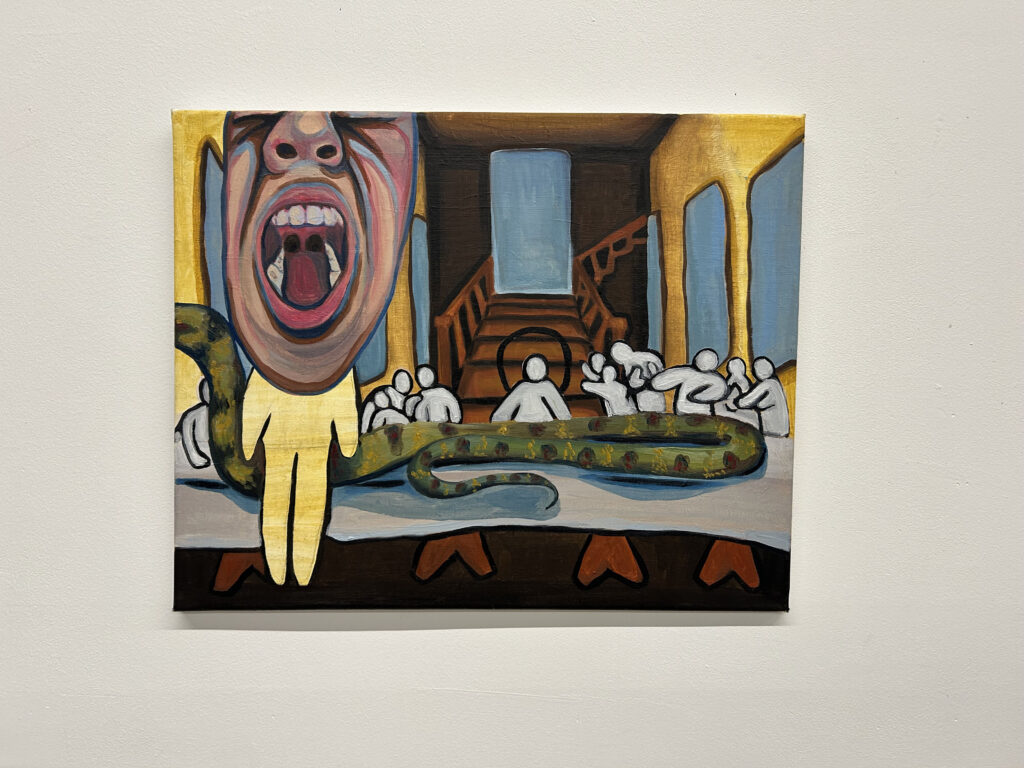
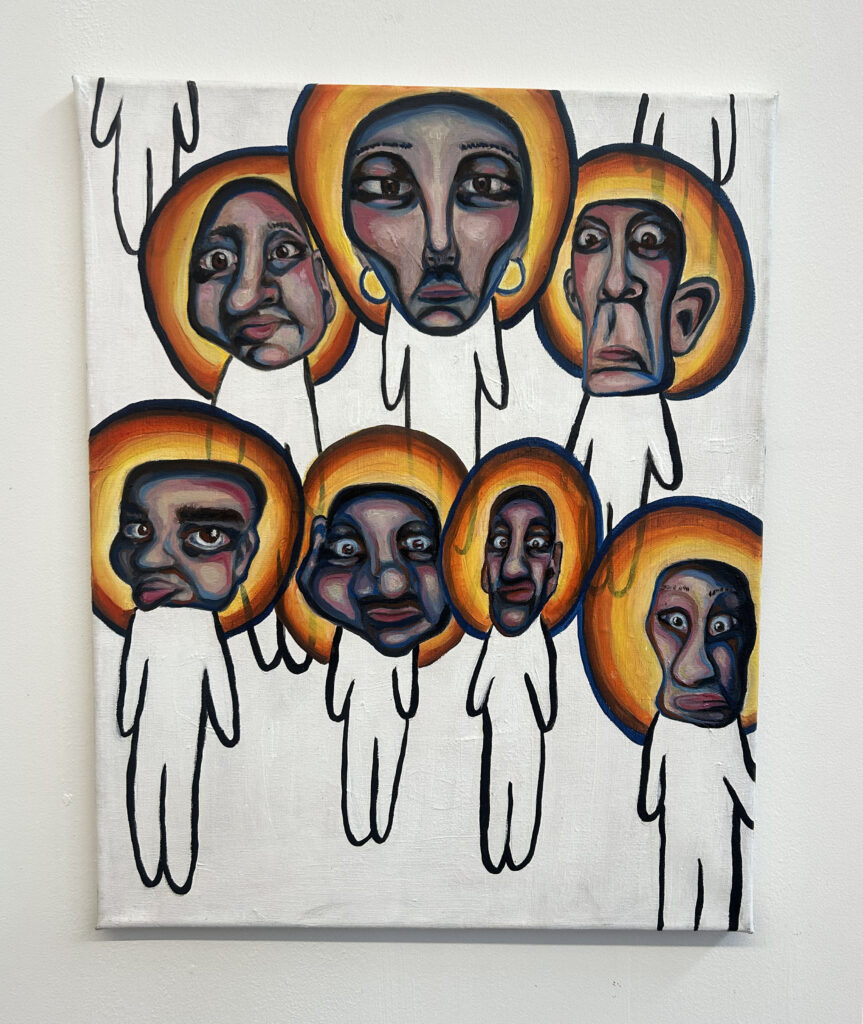
My practice explores the universality of human experience through two primary approaches: creating reductive, broadly applicable human forms, and recontextualising historically charged Renaissance imagery within contemporary painting. Both methods emphasise shared humanity and collective identity. By simplifying the figure, I allow it to stand in for all bodies, reflecting the cyclical nature of lived experience.
Appropriation is central to my process. Influenced by Mary Heilmann, I prioritise planning, borrowing, and intuitive execution. My work combines contemporary pictograms, prehistoric simplified figures, and Renaissance and Surrealist imagery, creating a dialogue about the continuity of human behaviour and art across time.
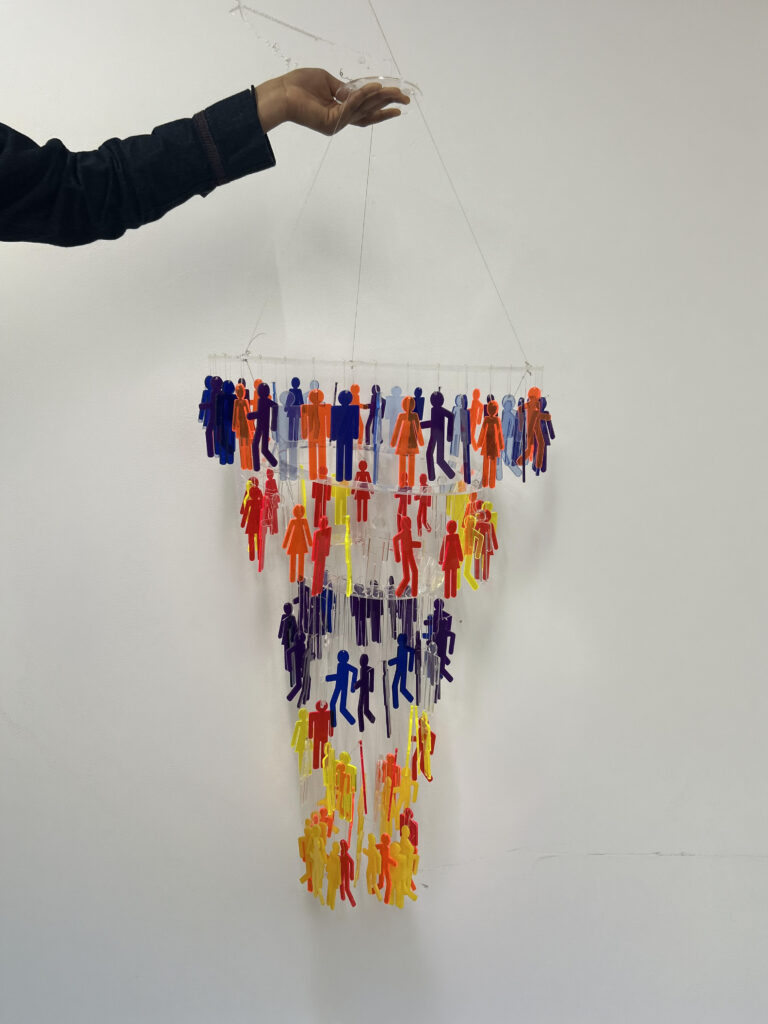
Drawing on Immanuel Kant’s idea that individuals should be treated as ends in themselves, my work questions whether reducing identity diminishes humanity, or if something essential remains. Inspired by Julian Opie’s Walking Figures, I strip away identifiers to achieve universality. I extend this into installation through pictogram chandeliers and acrylic cut-outs, aiming to immerse the viewer. Do Ho Suh’s Floor (2000) influenced my exploration of collective representation.
The “Accidental Renaissance” phenomenon informed my reinterpretations of works such as The Last Supper. Influences from artists like Cato and Ed Atkins introduced elements of distortion and the uncanny.
Ultimately, my work investigates two ideas: “we are one” and “we’ve been here before,” encouraging a sense of shared experience and collective awareness.